Sunday, 21 November 2021

October - Extreme Weather on our meet

October 31st 2021, the day of our meet, demonstrated what we could call extreme weather here in Sussex. The torrential rain and sudden squalls only lasted whilst our meet lasted and as soon as we had finished, the weather cleared - but the rain was continuous whilst it lasted, starting early in the morning. Those who decided to attend were soaked but collected a considerable amount of litter despite the conditions.

Birds and mammals made themselves invisible with a frog and three Magpies the only sightings.

The mornings torrential rain did not result in any 'river out of bank' incidents here - the drainage basins and ponds had collected more rainwater about ten days previously which had quickly soaked away.

The sight of butterflies in the autumn is quite often a surprise but Red Admirals are always an exception in this area where mature Ivy plants form part of the hedgerows:


A Red Admiral butterfly basking on a late bramble leaf amongst 
a late patch of nettles. Their large wings can effectively absorb heat 
from the sun even on winter days.
Here in Sussex Red Admirals have been seen on almost every day of the year.
This year to date Red Admirals have been seen in November on almost every sunny day, the latest so far having been seen on 16th November after a clear frosty morning.


Tuesday, 28 September 2021

September ends with sudden changes

 The day of our meet - 26th September 2021 was rather sombre with dark clouds keeping light levels low and not much leaf fall yet. Despite this robins were now singing, only short songs and 'chinks' some loud and assertive. Contact-calling Chiffchaffs could still be heard too, mingling with other small birds in Oaks and Field Maples. This years tree planting of Hawthorns and Hazels is doing well in the gaps and vegetation growth in general has exceeded all expectations with flowering plants attracting many insects throughout the summer:


Fleabane flowers have been abundant this year, attracting Small Copper 
butterflies mostly in warm grassland areas. They can still be seen in October, given fine 
dry autumn weather. These strong fliers are small and are not seen in large numbers.
All butterflies need shelter in bad weather therefore their habitat is exceptionally important,
with a diversity of grasses and wild flowers, bank vegetation, wild fruits and sunny gravel areas too.
Work for the day was completed before the sun appeared in the afternoon but this was not to last with wind and torrential rain following that night. That's typical of autumn and a trigger for the last migrant birds to leave. The river water levels had been steadily declining so it was good to see some rain at last. 


Thursday, 2 September 2021

High Summer Meet in August

 Our Meet on 22nd August 2021was held on a bright, warm, sunny and humid day more typical of summer than our July meet, but with rainclouds hovering in the wings, ready to displace the sun at any minute. Wildlife is adapting to what is likely to be a short summer and butterflies are no exception. It has been good to see so many Gatekeepers about at last but they have a short flight time and are usually scarce by the end of August. They are an indicator of healthy ecology where hedgerows are allowed to grow old and strong with a good diversity of native species bordering wild meadows. They can often be seen chasing other species of butterflies which invade their territory along a hedge.


Gatekeeper butterfly (Pyronia tithonus) with another in the background, nectaring with many other small insects.

Butterflies, Dragonflies and other insects together with amphibians and small mammals keep the riverside active whilst birds are mostly still quietly hiding.  Robins will soon break the silence....


Monday, 26 July 2021

The July Storm

 OUR AIM IS TO PROTECT OUR NATURAL ENVIRONMENT AND THE HABITAT IT PROVIDES FOR WILDLIFE ALONG THE RIVERSIDE

Our Meet yesterday - Sunday 25th July 2021 was one of uncertainties - will anyone brave the elements or will it be completely washed out?  If not - what will we find ? 

As it happened the rain had lessened somewhat before 09.00, encouraging some of us to set out early, only to experience a downpour on setting out. This time the massive oaks did not provide much shelter, the direct downward weight of the rain overcoming canopies in full leaf. We continued nevertheless with the rain turning to light drizzle and abating for almost two hours. By the time the rain started again, we had finished, There has been far less rubbish to collect  so far this summer than last year.  The weather  took a turn for the worse in the afternoon when the area took a direct hit from a torrential rainstorm followed by a close thunderstorm. This drifted away gradually threatening to return several times. As soon as the rain struck, birds had retreated to cover and stayed put until well after the thunderclouds had gone. Woodpigeons were the exception, some flying out from the trees undeterred.

As there was no wind, damage was only done by the weight of the rain battering down grasses and more fragile plants and leaves.


The next morning after the rain, on Monday 26th July 2021:
One of the embankment fruit trees bearing a good crop
of undamaged fruit  with many weeks to go before they will be ripe.
The embankment grasses were somewhat flattened by the rain but recovering and drying out, with Gatekeeper butterflies attending, attracted by thistle and Senecio jacobaea flowers.
These butterflies also patrol the Hornbeam hedgerows keeping to the sunny side.


Monday, 12 July 2021

The Green June Meet

 OUR AIM IS TO PROTECT OUR NATURAL ENVIRONMENT AND THE HABITAT IT PROVIDES FOR WILDLIFE ALONG THE RIVERSIDE

Our Meet on Sunday 27th June 2021 took place before the rain came on an overcast day. The riverside walk and surroundings had escaped much littering - the weather again being unsuitable for such pastimes apart from a refuge under an oak providing shelter from the rain on the cycle path.

With green vegetation growing quickly in the warming humid drizzle and occasional bursts of hot sunlight, the countryside was fast transforming into a 'tropical rainforest' with invertebrate life abundant. Birds were making up for lost time, many busy with second broods with no shortage of insect food for their young.

Not all insects benefit from drizzle however, especially butterflies. The Holly Blue butterfly appeared late this year but the Hollies and Ivies it uses, being evergreen, provide good shelter from rain. In spring, Bramble blossom provides nectar for it to feed on and patches of the earliest blossom were few and far between, in sunny locations.


The female Holly Blue has a distinctive wide black border  on
the forewings and all Holly Blues have small dark dots on the 
'silvery' underside without any orange colouring.

As  bright bonus on such a a grey day, a kingfisher was seen making a fast flypast under the footbridge, low over the river.

see date for next meet.


Sunday, 20 June 2021

May Delayed

 OUR AIM IS TO PROTECT OUR NATURAL ENVIRONMENT AND THE HABITAT IT PROVIDES FOR WILDLIFE ALONG THE RIVERSIDE

Our May Meet took place on 23rd May 2021 on a day typical of May this year, cool, becoming windy.

The month had been cooler and windier than in recent years with signs of spring delayed by about two weeks. This continued to be the case in the flowering of wild flowers, trees coming into leaf, blossom appearing and migrant birds nesting.

Our work was carried out according to the current HDC COVID-19 restrictions with activities such as hauling a trolley out of the river postponed until our next meet on 27th June 2021when we were expecting Lockdown to have been lifted on 21st. The haul was not large as the wild May weather had put off plans for litter generating outdoor activities. 


Fruit blossom after the wind and rain. The results this year will probably be very varied depending on location, with some areas sheltered from the wind, rain and hail. Different varieties have very different blossoming times as well. Certainly all the trees have blossomed this spring.


The May blossom was late enough to avoid much damage. This is a Hawthorn tree planted as part of a protective hedge with Hazel and Hornbeam, with fruit trees here and there all of which have borne fruit each summer.


Germander Speedwell (Veronica chamaedrys)
Thought to bring travellers good luck on their way. Seldom noticed by passers-by in recent times - due to the speed with which people travel ... we hope it will survive to brighten verges and corners.


Thursday, 20 May 2021

April 2021 - but no showers

 OUR AIM IS TO PROTECT OUR NATURAL ENVIRONMENT AND THE HABITAT IT PROVIDES FOR WILDLIFE ALONG THE RIVERSIDE

Our April 2021 meet was held on Sunday 25th April - a fine clear start to the day with a cool ENE breeze. The ground was very dry after many days without rain (although it did snow for a short while on 12th!).


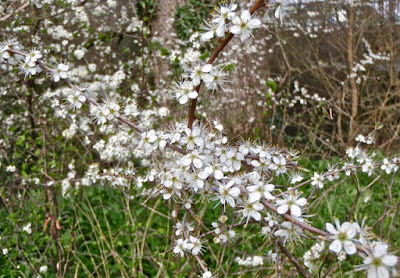
Blackthorn blossom appears before the leaves. The blossom remained in bud for longer than usual this spring.

The morning started early with very loud calls from a Grey Heron - an altercation with a Herring Gull - the gull may well have been hoping for a free meal freshly caught on the river or nearby ponds. Later a sparrowhawk was seen sailing above, turning to avoid a gull. Another grey heron or maybe the same one was seen by two of group that morning. 

It was a successful meet with a family group making short work of removing a muddy discarded trolley from the river bed and another family group collecting a large amount of  litter previously hidden from sight. Others worked their separate ways ways along collecting litter. Hopefully the constraints of working according to Covid - 19 protocol will only last another month or so.

Our next meet is on Sunday 27th JUNE 2021. (see NEXT MEET)